
When you consider how particle size impacts everything from product texture to processing efficiency, it’s clear that understanding distribution is essential Particle Size Testing. You’ll find that choosing the right measurement method—whether laser diffraction, sieving, or light scattering—can make a significant difference in accuracy and outcomes. But how do you decide which technique fits your needs, and what benefits can you expect once you have precise data?
Why Particle Size Distribution Matters
Although it might seem like a minor detail, particle size distribution plays a crucial role in many industries and processes. When you understand how particle sizes vary within a material Lab Alliance, you gain control over its behavior and performance.
Whether you’re working with powders, liquids, or solids, particle size affects flow, mixing, reactivity, and stability. Getting this right means you can optimize product quality, reduce waste, and improve efficiency.
You’re not just guessing—you’re making informed decisions that liberate you from unpredictable results. Knowing the distribution helps you tailor processes to meet your exact needs, whether in pharmaceuticals, food, or manufacturing.
In essence, it’s about enabling freedom through precision, ensuring your materials perform exactly as you want them to, every time.
Particle Size Measurement Methods: Laser Diffraction, Sieving & Light Scattering
When you need accurate particle size data, choosing the right measurement method is essential. You want freedom to analyze particles effectively, whether in a lab or on the go. Here are three common methods:
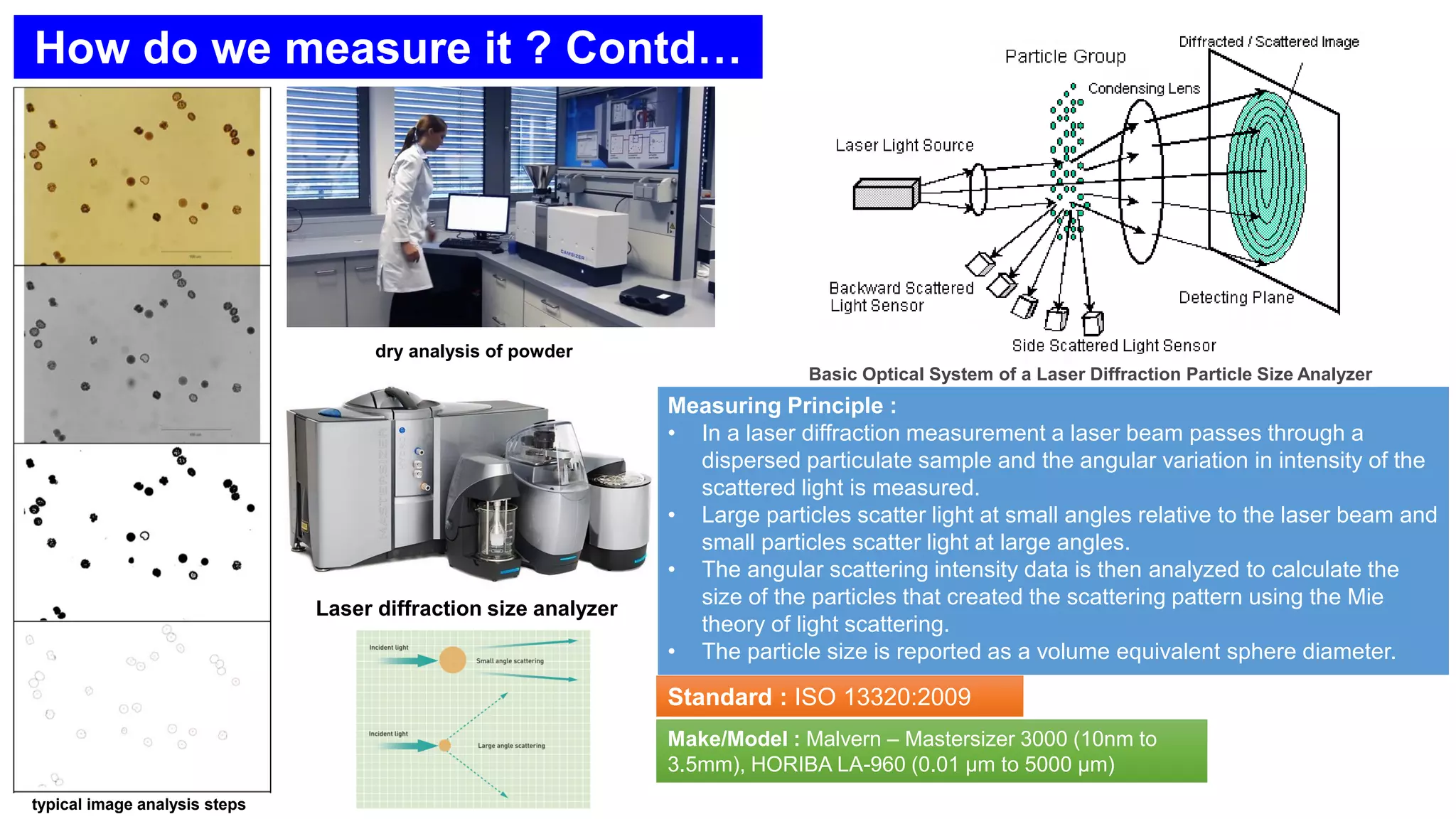
- Laser Diffraction: This technique measures the angle and intensity of light scattered by particles, offering rapid, precise size distribution for a wide range of particle sizes.
- Sieving: A straightforward mechanical method where particles pass through meshes of varying sizes. It’s simple, cost-effective, and great for larger particles.
- Light Scattering: Similar to laser diffraction but often used for smaller particles in suspension. It analyzes scattered light patterns to determine size.
Each method gives you freedom to choose based on particle type, size range, and your specific needs.
Selecting Particle Size Measurement Methods for Your Industry
Since each industry handles unique materials and processes, you need to pick a particle size measurement method that fits your specific requirements. Consider factors like the material’s properties, desired accuracy, sample volume, and speed of results.
For example, if you work with dry powders, sieving might be straightforward and cost-effective. But if your materials are wet or fragile, laser diffraction or light scattering could offer better precision without altering the sample.
Think about your workflow too—do you need real-time monitoring or detailed lab analysis? Don’t settle for a one-size-fits-all solution; instead, choose a method that gives you control and flexibility.

Industrial Applications of Particle Size Analysis
Understanding how particle size impacts your processes can dramatically improve product quality and efficiency across various industries. When you grasp the role of particle size analysis, you gain control over critical factors that affect your final product.
Here are three key industrial applications where this knowledge sets you free to innovate:
- Pharmaceuticals: You guarantee consistent drug delivery by controlling particle size for best dissolution and absorption.
- Food and Beverage: You enhance texture, flavor, and shelf life by tailoring particle distribution in powders and emulsions.
- Mining and Minerals: You maximize extraction efficiency and equipment wear by monitoring particle size in ore processing.
How Accurate Particle Size Data Improves Quality and Reduces Costs
Although collecting precise particle size data might seem tedious, it directly boosts your product quality and cuts costs by minimizing waste and optimizing processes. When you know the exact particle size distribution, you can fine-tune your production to achieve consistent results every time.
This means fewer defects, less rework, and less scrap material—saving you money and resources. Accurate data also helps you avoid overuse of raw materials, so you’re not overspending unnecessarily.
Plus, it lets you respond quickly to process changes, maintaining your product’s integrity without costly downtime. By relying on solid particle size information, you gain control and flexibility, freeing you from guesswork and inefficiencies.
Ultimately, you’ll deliver better products while keeping your budget in check.
Conclusion
By understanding particle size distribution and choosing the right measurement methods—like laser diffraction, sieving, or light scattering—you can improve your product quality and streamline processes. Accurate data helps you reduce waste, cut costs, and boost efficiency across industries. Whether you work in pharmaceuticals, food, or mining, mastering particle size analysis lets you stay competitive and innovative. Embrace these techniques to enhance control and deliver better products every time.


